Sage Hartmann · 13 October 2026
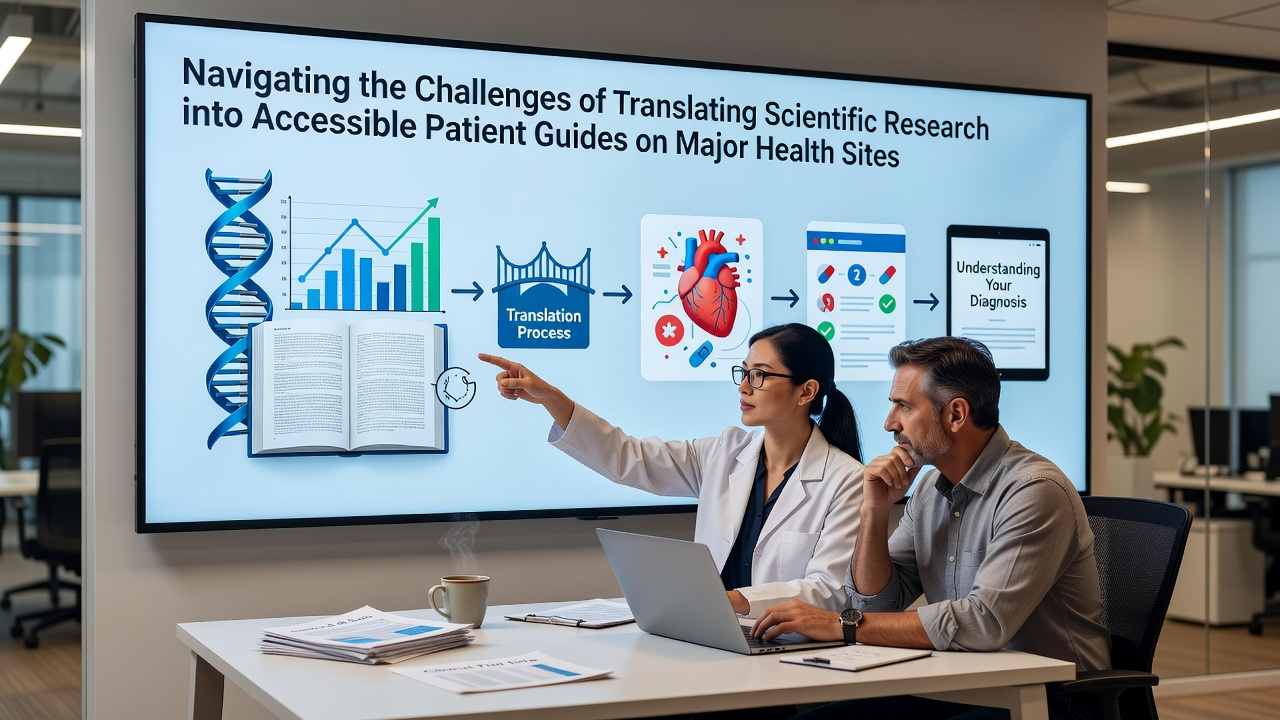
Navigating the Challenges of Translating Scientific Research into Accessible Patient Guides on Major Health Sites
Translating dense scientific research into patient guides demands careful navigation of terminology barriers, accuracy requirements, and readability standards that major health sites must address daily, and this process shapes how millions access reliable health information each year. Experts observe that peer-reviewed studies often contain specialized language, statistical nuances, and evolving methodologies which resist direct conversion into everyday terms without losing essential context, while patient guides prioritize clear action steps and risk explanations that audiences can apply immediately.
Core Barriers in Research Translation
One major obstacle arises when complex data sets and conditional findings from clinical trials require simplification that preserves statistical significance and study limitations, and researchers have documented cases where oversimplification led to patient confusion about treatment efficacy or side effect probabilities. Another layer involves keeping content current because new publications appear constantly, and health sites must integrate fresh evidence while retiring outdated recommendations in coordinated updates across multiple pages. Take one research group that tracked guideline revisions across several platforms and found that delays in incorporating meta-analyses from 2025 created temporary gaps until teams completed cross-checks with original data sources.
Balancing Technical Accuracy with Readability
Health communicators face pressure to maintain fidelity to source material while achieving reading levels suitable for broad audiences, and studies indicate that most scientific abstracts score at college or graduate comprehension levels whereas effective patient resources target eighth-grade readability or lower. This requires iterative drafting where subject matter experts review drafts alongside plain-language specialists, and the back-and-forth process can extend timelines significantly when disagreements surface over which details qualify as essential versus supplementary. What's interesting is how visual aids such as infographics and decision trees help bridge gaps, since they allow sites to present comparative risks or procedural steps without lengthy paragraphs that might overwhelm readers.
Processes Employed by Leading Platforms
Major health sites typically establish multi-stage review workflows that begin with literature screening and end with usability testing among target patient groups, and these workflows incorporate feedback loops that flag terminology still too technical after initial revisions. Data from health literacy assessments show that even minor phrasing changes can shift comprehension rates by double-digit percentages, prompting teams to run A/B tests on live pages before full rollout. In October 2026 several organizations plan synchronized updates tied to emerging consensus statements from international bodies, allowing coordinated releases that reflect the latest trial outcomes on topics ranging from chronic disease management to preventive screenings.

Collaboration with external specialists adds another dimension because academic authors and clinicians contribute domain expertise during review cycles, and this input helps sites avoid common pitfalls such as omitting important contraindications or overstating benefits reported in early-phase studies. Observers note that platforms maintaining dedicated evidence-review teams experience fewer correction notices after publication compared with those relying on less structured volunteer contributions.
Tools and Standards Supporting the Work
Content management systems now integrate readability scoring plugins alongside citation management features, enabling writers to flag problematic sections in real time while linking back to primary sources for verification. Guidelines from bodies such as the National Institutes of Health emphasize the importance of layering information so users can drill down from summaries into methods sections without leaving the site, and similar frameworks appear in European Medicines Agency resources that stress transparency about evidence quality. Sites also track user engagement metrics to identify sections where drop-off rates spike, signaling areas that need further simplification or additional explanatory visuals.
Emerging Developments and Future Outlook
Artificial intelligence tools assist with initial drafting and terminology mapping, yet human oversight remains essential because algorithms occasionally introduce subtle inaccuracies when handling conditional language from study results. Research indicates that hybrid approaches combining machine suggestions with expert editing reduce production time without compromising accuracy thresholds established by health literacy standards. As new data streams from real-world evidence studies grow, platforms continue refining methods for incorporating observational findings alongside randomized trials, and this integration demands clear labeling to help readers distinguish study designs and their respective limitations.
Conclusion
Effective translation of scientific research into patient guides on major health sites rests on structured workflows, multidisciplinary review, and ongoing measurement of comprehension outcomes, and continued refinement of these practices supports broader public access to evidence-based information. Sites that invest in these processes demonstrate measurable improvements in user retention and reported understanding across diverse health topics.